About Lingowright
Built by engineers who shipped broken strings too many times
Founded in 2021 in New York City by a localization engineer who got tired of watching ICU plural blocks get stripped at 2am before a twelve-locale launch.
Our story
Why we built Lingowright
In 2021, Sofia Marchetti was leading the i18n effort on a fintech product that needed to ship in twelve locales simultaneously. The team tried three different TMS tools. Each one stripped ICU plural blocks from every {count, plural, one{...} other{...}} string. Each one let German button labels overflow the 30-character limit without a warning. The manual QA cycle to catch these issues added two weeks to every release.
The observation was precise: existing tools treat a string as a text fragment. They don't know it's a CTA button with a 28-character limit. They don't know the {{first_name}} is a template variable that must survive translation intact. Lingowright was built around that distinction.
Lingowright does not replace professional translators or post-edit review for regulated or high-stakes copy. It handles the engineering layer — the part where variables get stripped, plural forms get collapsed, and buttons overflow — so that when a human translator does review, they're reviewing meaning, not fixing broken syntax.
Product engineering teams and localization leads use Lingowright because they need translations that fit their UI — not translations that technically exist.

Team
The people behind Lingowright
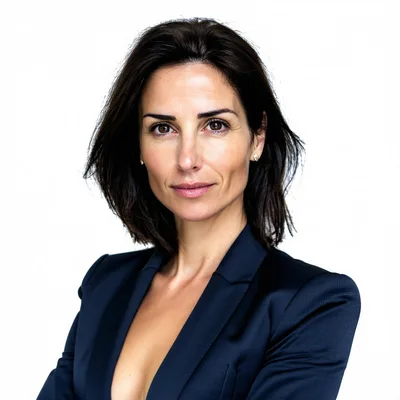
Led i18n infrastructure at an early-stage fintech platform from 2018 to 2021, shipping in eight locales. Saw every way a TMS tool can break an ICU plural block. Founded Lingowright in January 2021. Speaks Italian and English natively; reads enough Japanese to catch a botched honorific.
Compiler engineer who spent three years on parser infrastructure before pivoting to localization tooling. Designed the Locale Engine's CLDR plural-form expander and the Unicode Bidirectional Algorithm implementation for RTL output. Has strong opinions about correct dir="rtl" metadata placement.
Previously built CI/CD localization pipelines at two growing SaaS companies, one shipping in 11 locales, one in 6. At Lingowright, she owns the GitHub integration, the Contentful sync pipeline, and the delta-detection logic that translates only changed string keys on each push.
Work with us
Lingowright is a small, technical team based in New York City. We hire engineers who care about correctness — about the CLDR spec, about bidirectional text, about localization engineers not having to patch broken strings at 2am.
Get in touch